Thinking of Starting a Blog - Here’s What We Learned in 3 Days!
INTRODUCTION
Starting a blog or website for your business can feel like a daunting task especially when you’re not entirely sure where to begin.
Just a few days ago, we found ourselves in that exact position. With an idea in mind but no established platform, we began the process of building our own website and blog from the ground up. From choosing a business name and securing a domain, to designing the layout, creating content, and navigating the technical setup, what initially felt overwhelming quickly became a structured and achievable process.
Over the course of three days, we developed a clearer understanding of what it really takes to get started and more importantly, what actually matters in those early stages. While launching a website or blog may seem like something that requires weeks of preparation, our experience showed us that taking small, focused steps can make the process far more manageable than expected.
In this post, we’re sharing what we learned while building our own platform, in the hope that it might make starting your own blog or website feel a little less intimidating.
Finding the Right Name
Choosing a name for your website or blog is often one of the first and most challenging steps in the process. Your name becomes the foundation of your brand identity, shaping how your business is perceived by potential customers and how easily they can remember or recognize you online.
We quickly realised that selecting a name wasn’t just about what sounded good. It needed to reflect what we were offering, feel professional, and remain flexible enough to grow with us over time. We wanted something that would represent our services clearly without limiting future opportunities or sounding overly specific.
It’s also important to consider whether your chosen name is available as a domain, as consistency between your business name and website address helps create a stronger, more recognizable online presence. This step may take some trial and error, but finding a name that feels aligned with your purpose is a valuable starting point when building your platform.
Securing a Domain
Once you’ve chosen a name that reflects your business, the next step is securing a domain. Your domain name becomes your website’s online address, making it easier for customers to find and recognize your business across different platforms.
It’s generally recommended to keep your domain as close to your business name as possible, as this helps maintain consistency and strengthens brand recognition. Availability can vary depending on demand, so it may take some flexibility when selecting the final version of your web address.
When securing a domain, it’s also worth considering the type of extension that best suits your brand. While traditional options such as .com remain popular, alternative extensions like .studio, .co, or .online can offer more availability and still present a professional image when aligned with your services.
Registering your domain early in the process ensures that your chosen name is reserved for your use, allowing you to begin building your website and establishing your online presence with confidence.

Illustration representing the process of securing a domain name for your business website.
Designing Your Website
With your domain secured, the next step is designing your website. At this stage, it can be tempting to focus on making everything look perfect straight away, but we found that prioritizing structure and clarity made the process far more manageable.
Before considering colors, images, or layout details, it’s helpful to think about what your website needs to communicate. Identifying your key services, deciding how your content will be organized, and determining what information visitors are most likely to look for can provide a clear starting point for your site’s design.
Creating a simple layout that allows users to navigate easily between pages helps ensure that your website feels accessible and intuitive. From service descriptions to blog content, each section should guide visitors towards understanding what your business offers and how it can meet their needs.
Once the structure is in place, visual elements such as color schemes, typography, and imagery can be introduced to support your brand identity. Keeping these choices consistent throughout your site contributes to a more cohesive and professional appearance, helping build trust with your audience from the moment they arrive.
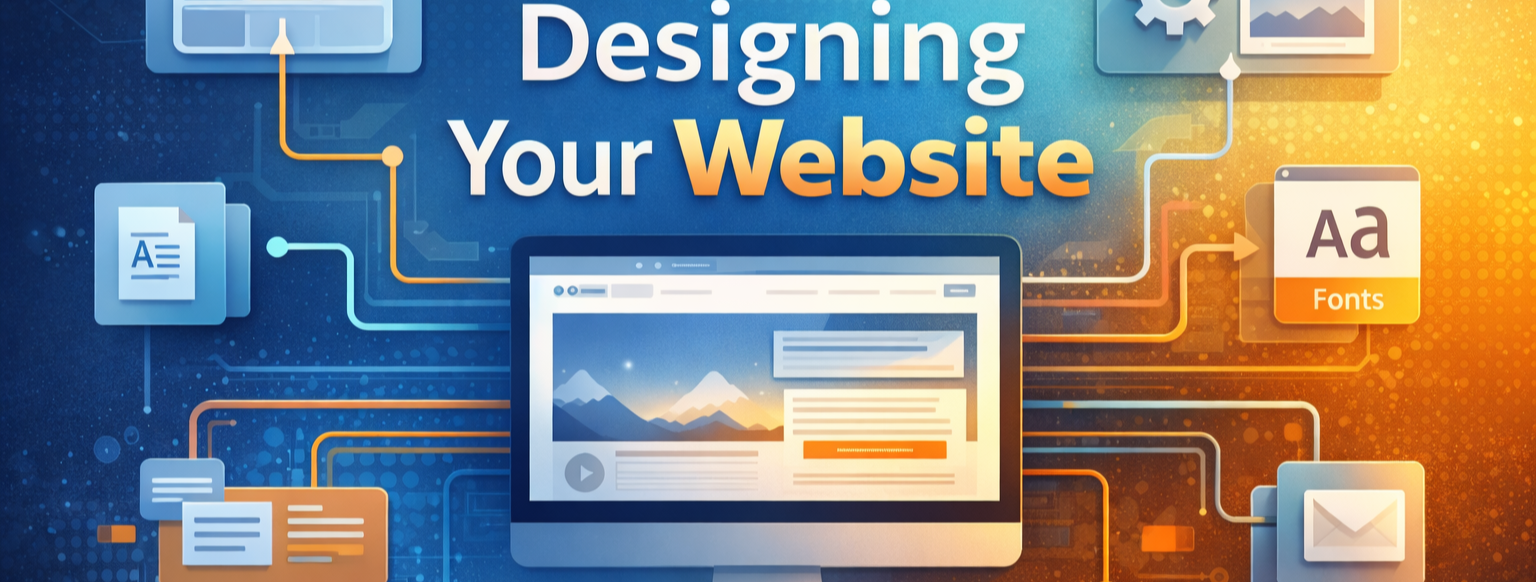
Flowchart-style illustration showing the process of structuring and designing a business website.
Creating Your First Content
With your website structure in place, the next step is developing your initial content. This is where your platform begins to take shape, giving visitors insight into who you are, what you offer, and how your services can benefit them.
Starting with clear and informative website content helps establish credibility and provides potential customers with the information they need to understand your business. Whether outlining your services, introducing your brand, or sharing insights through blog posts, your content should reflect your values and communicate your purpose in a straightforward and accessible way.
Creating your first pieces of content may feel challenging at first, particularly when you’re deciding what to say and how to say it. Focusing on topics that are relevant to your audience’s needs or questions can make this process easier and ensure that your content provides genuine value.
Incorporating blog posts into your website also allows you to share knowledge, experiences, or updates that demonstrate your expertise within your field. Over time, regularly adding new content can support audience engagement and help strengthen your online presence.

Illustration representing the process of creating and developing your first website or blog content.
Navigating the Technical Setup
As your content begins to come together, the technical side of launching a website becomes the next important step. While this part of the process can initially seem complex, many modern website platforms are designed to make setup more accessible than expected.
Tasks such as connecting your domain, configuring email accounts, and ensuring your website is ready to be published may require some time and attention to detail. From verifying your domain settings to preparing your site for indexing on search engines, each step plays a role in establishing your online presence.
Although technical setup can feel overwhelming at first, taking it one stage at a time helps make the process more manageable. Ensuring that your website is functional, accessible, and connected to the necessary tools allows you to confidently move forward with publishing your content and promoting your business online.
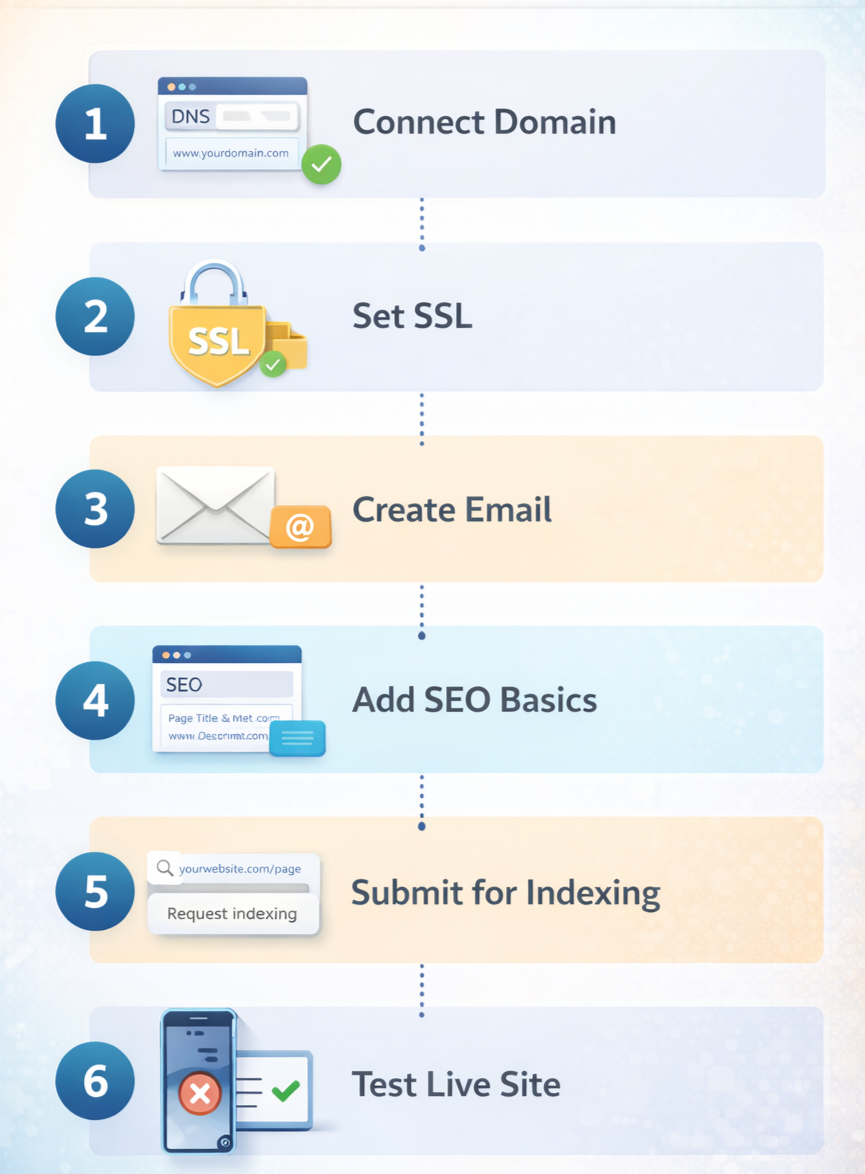
Step-by-step illustration showing the key stages involved in setting up a business website for launch.
Publishing and Promoting Your Blog
Once your website content and technical setup are complete, the final step is publishing your blog and making your platform available to your audience. Seeing your website live for the first time can be both exciting and rewarding, marking the transition from planning to actively building your online presence.
Publishing your blog allows potential customers to begin engaging with your content and learning more about your services. However, promotion plays an equally important role in ensuring that your efforts reach the right audience.
Sharing your blog posts through social media platforms, business pages, or professional networks can help increase visibility and encourage interaction. Additionally, making use of tools such as search engine indexing can support your website’s discoverability, allowing it to appear in relevant search results over time.
By taking these final steps, your blog becomes an active part of your marketing strategy helping to build awareness, establish credibility, and connect with your audience as your business continues to grow..

Illustration representing the process of publishing and promoting blog content to reach a wider audience.
Conclusion
Starting a blog or website for your business may seem like a time-consuming or complicated process at first, but our experience showed that taking small, focused steps can make it far more achievable than expected.
From choosing a name and securing a domain to designing your website, creating content, and navigating the technical setup, each stage plays a role in building a platform that represents your business effectively online.
While every journey will look slightly different, beginning the process is often the most important step. With the right approach and a clear understanding of your goals, creating a website or blog that supports your business doesn’t have to take weeks of preparation.
Taking that first step today could be the start of something that grows alongside your business in the future. Sometimes getting started is simply a matter of deciding to begin.