Your Brand is Talking - Is It Saying the Right Thing?
When your brand is still establishing its presence, creating a lasting impression can be a challenge. However, understanding the role of brand messaging is essential to building recognition and positioning your business for long-term success.
A strong brand identity forms the foundation for growth, shaping how your business is perceived by potential customers and influencing whether they choose to engage with your services.
Today, branding goes beyond logos, slogans, or color choices. It involves developing strategies that remain relevant, consistent, and connected to your audience’s needs and expectations. Effective branding requires an understanding of what your business represents and how to communicate that message clearly across all platforms.
By learning how to present your values, tone, and purpose in a way that resonates with your audience, your brand can move beyond simple recognition creating meaningful connections that encourage trust, loyalty, and ongoing engagement.
Effective Communication
Communicating your brand is about more than simply promoting a product in the hope that someone will make a purchase. Effective brand marketing focuses on telling your audience who you are, what you stand for, and what makes your business different from others in your industry. Every interaction a customer has with your business from your website to your social media presence contributes to how your brand is perceived.
A well-developed communication strategy can have a meaningful impact on your audience by creating clear channels through which your messaging reaches and engages potential customers. Increasing awareness and capturing attention are essential first steps in building recognition and encouraging engagement.
Consistent brand communication also helps secure your position in today’s competitive market by reinforcing trust and cultivating customer loyalty over time. When your messaging clearly reflects your values and offerings, it can elevate your products or services from optional to essential in the eyes of your audience.
Developing a strong brand identity is therefore crucial, as it shapes consumer perception and supports long-term loyalty to your business.

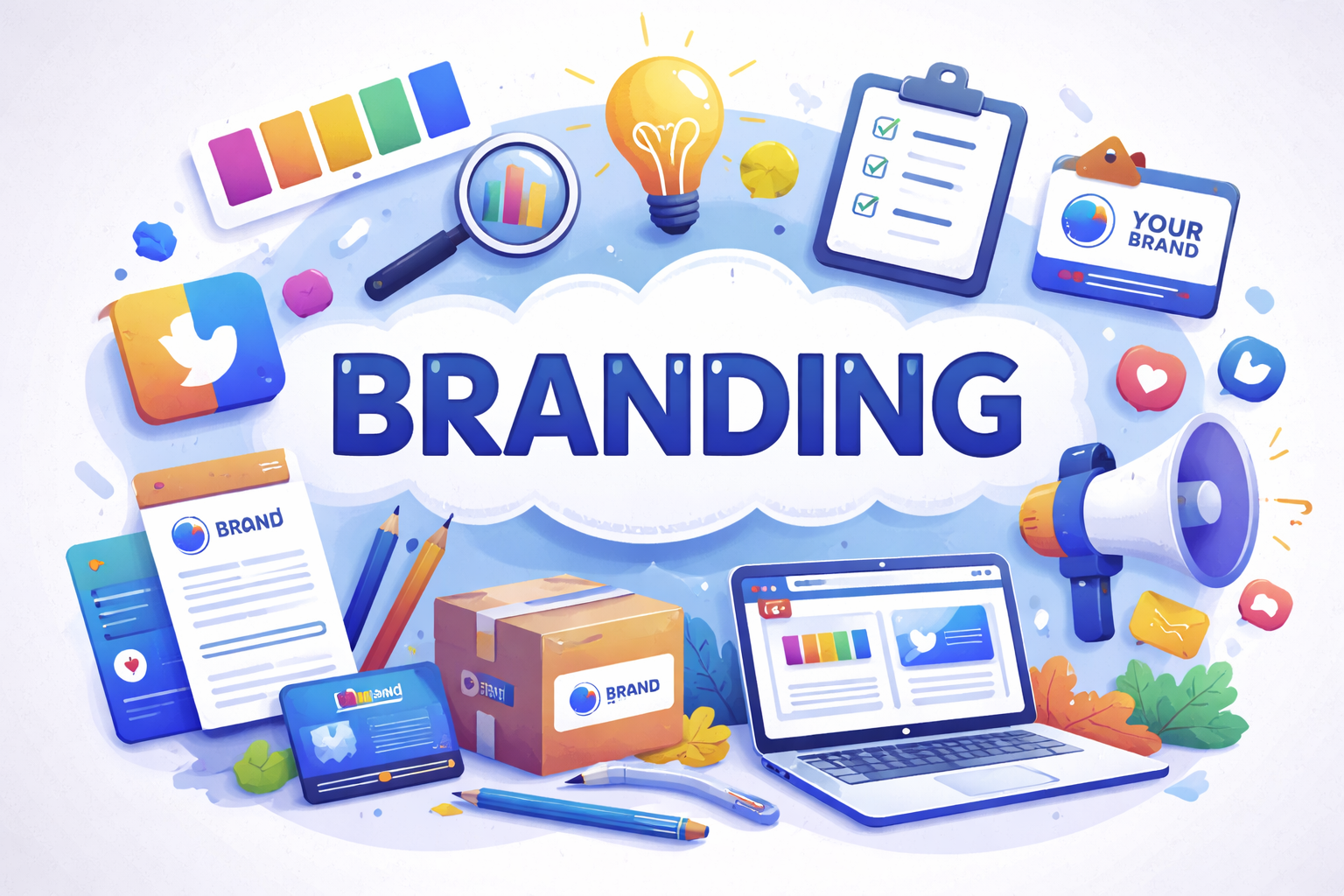
A branding infographic featuring digital devices and communication to represent how effective brand messaging builds trust and customer loyalty.
Identity and Consistency
Your goal when building a brand is to create a unique identity that is effective, memorable, and marketable. Strong branding can enhance your presence within your industry and provide a valuable competitive advantage. However, mastering your brand takes careful planning, creativity, and an understanding of both your competition and the factors that influence your success.
Crafting personalized experiences can help differentiate your business from competitors while creating lasting emotional connections with your audience. Tailoring these experiences to individual needs makes your brand more memorable and can significantly enhance how customers engage with your business.
Storytelling is another powerful way to build these connections. Sharing your experiences, values, or journey can create a sense of personal involvement, helping your brand feel more relatable and authentic to your audience.
To stand out in a competitive market, it’s essential to understand your audience and engage with them through meaningful and creative communication. Creating website content and social media messaging that resonates with your audience’s needs and expectations helps reinforce your brand’s purpose and value.
Visual elements such as logos, color schemes, and slogans also play an important role in distinguishing your brand from others and encouraging audience engagement. Without a clear and consistent identity, your messaging can become fragmented potentially leading to confusion, a weakened brand image, and reduced customer trust over time.

A stylized branding illustration showing storytelling, personalized experiences, and visual identity to highlight the importance of creating a unique and consistent brand identity.
Understanding your Audience and Market
Who are you speaking to?
Effective marketing connects your brand with a specific group of people who are most likely to engage with your products or services. By identifying your target audience, you can create content that resonates with their interests, values, and expectations encouraging them not only to choose your business, but to remain loyal over time.
It’s important that the products or services you promote align with what your audience genuinely wants or needs. To be successful, your offering should feel valuable and relevant to the individuals you are trying to reach. Many modern consumers now expect personalized experiences, making it essential to understand your audience before developing marketing campaigns.
For example, businesses offering wine tasting tours or vineyard experiences must ensure their marketing efforts are directed toward individuals aged 21 and older. Once this demographic has been identified, targeted campaigns can be developed to appeal specifically to their interests and preferences.
Research also shows that wine consumption has increased significantly among female consumers over recent decades, while male consumers are statistically more likely to purchase beer or spirits. As a result, wine marketing often focuses on appealing to female audiences in order to increase engagement and sales, while beer and spirits campaigns may take a different approach to attract their primary market.
By recognizing these distinctions, businesses can tailor their messaging and promotional strategies to suit different consumer groups. Rather than relying solely on broad, mass marketing techniques, focusing on targeted communication allows brands to engage more effectively with the audiences most likely to respond.
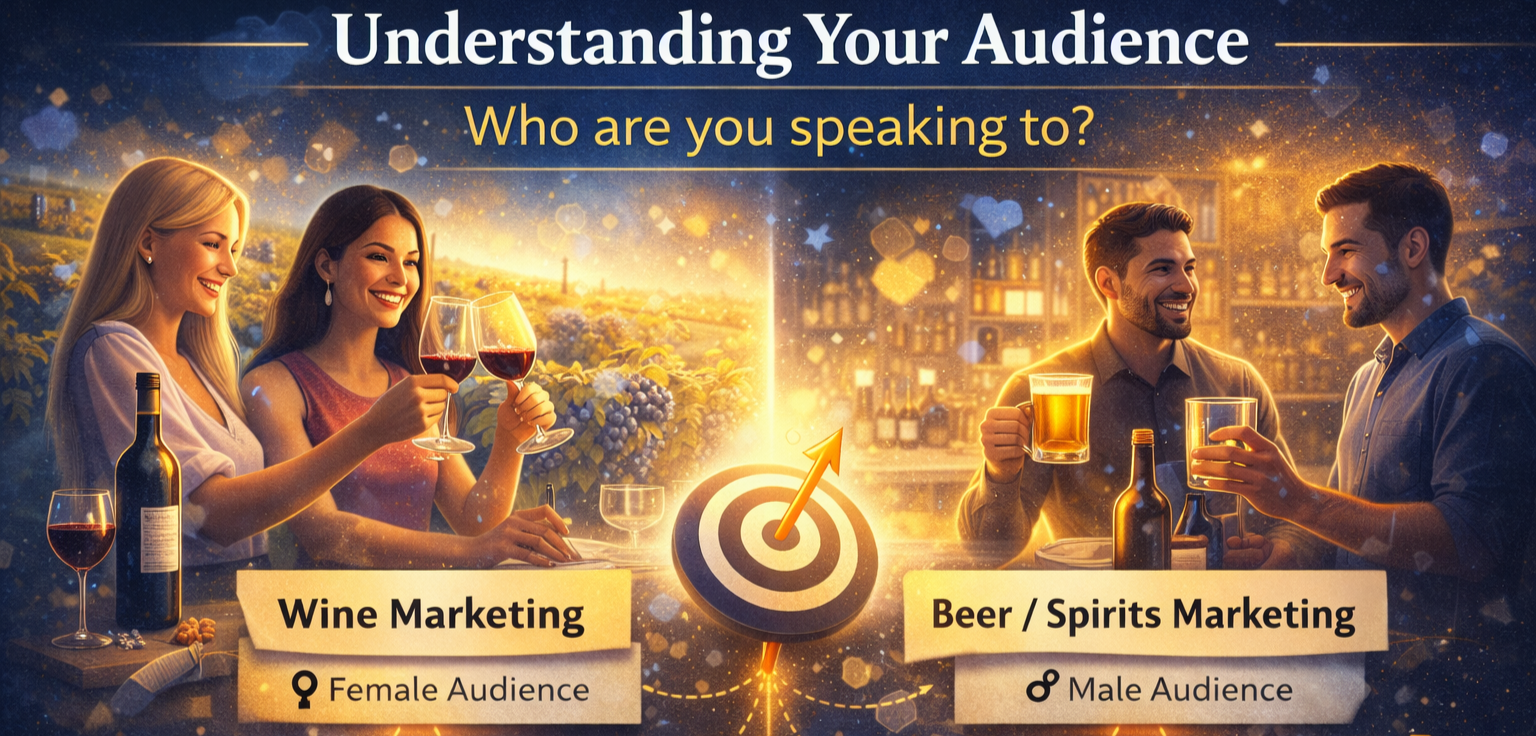
A infographic comparing targeted marketing strategies for different consumer groups to demonstrate the importance of understanding your brand’s audience.
First Impressions & Emotional Response
Before someone reads your headline, before they click a button and before they even know what service you offer, they’ve already formed an opinion about your brand.
First impressions online are almost entirely emotional and they happen in seconds. The colors you choose, the spacing between your text, the images you use, even the font style on your headings all send subtle signals to your audience about what kind of business you are and what they should expect from you.
A bold, high-contrast color palette may communicate energy, creativity, or urgency. Soft tones and clean layouts often suggest calm, professionalism, or trust. Dark backgrounds with minimal text can feel sleek and premium or distant and impersonal, depending on how they’re used. None of these choices are inherently right or wrong but they do shape how your brand is perceived before a single word is processed consciously.
For example, a website offering financial planning services might use bright neon colors and playful fonts in an attempt to appear approachable but unintentionally signal a lack of professionalism or seriousness.
Similarly, a creative service provider might opt for a muted, corporate layout in the hope of appearing established, only to come across as outdated or rigid.
In both cases, the message and the visual presentation are misaligned and that disconnect creates hesitation. When your design choices support your tone of voice and written messaging, your brand feels intentional. When they don’t, visitors may struggle to understand who you are, what you offer, or whether they can trust you.
Effective brand messaging considers not just what you say but how it’s presented visually because often, the way something looks determines whether someone will take the time to read it at all.
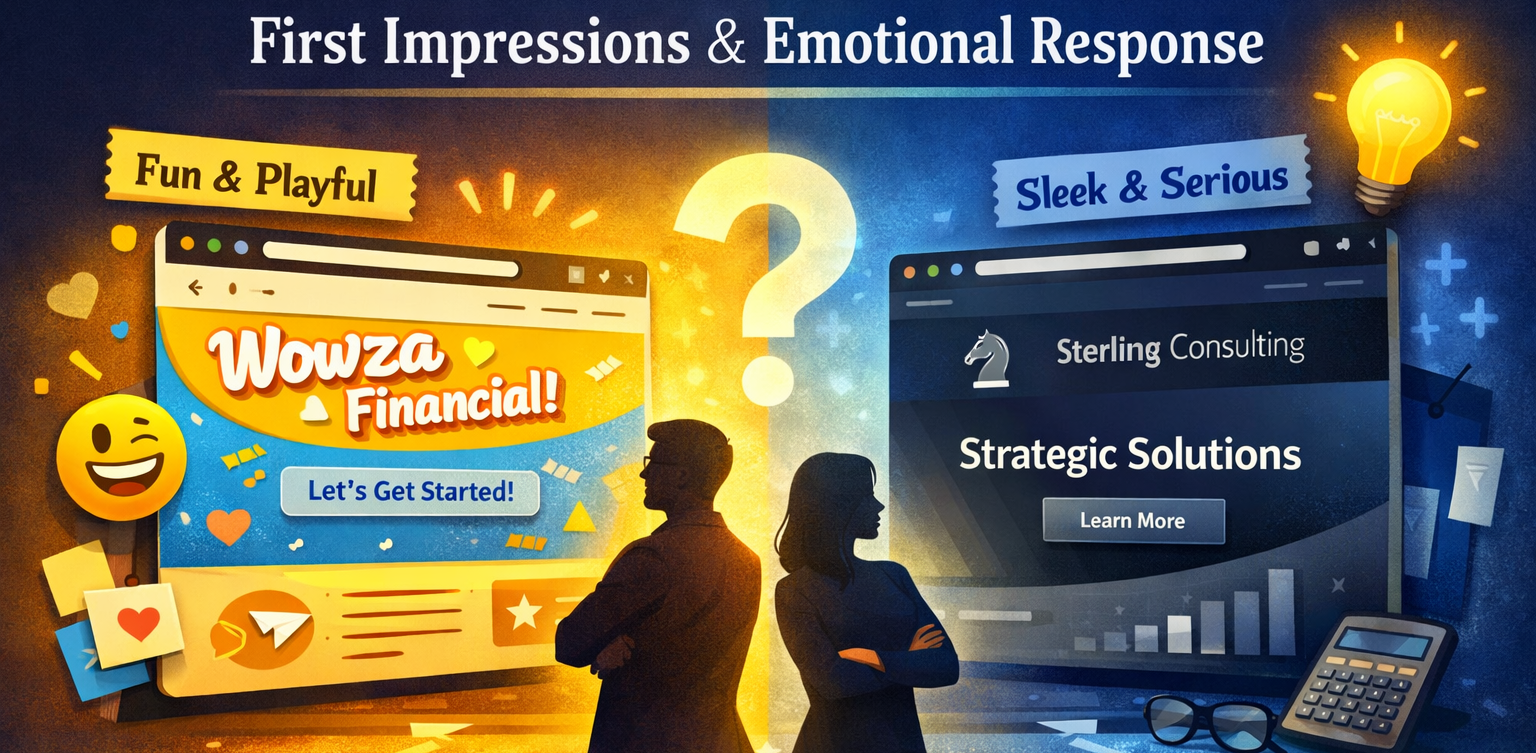
A digital illustration comparing two website styles to demonstrate how visual design influences emotional response and first impressions of a brand.
Alignment Between Design & Messaging
Strong brand messaging relies on consistency not just in what you say, but in how it’s presented.
When your website’s design and written content are aligned, your brand feels clear, intentional, and trustworthy. But when there’s a disconnect between the two, visitors may experience uncertainty even if they can’t immediately identify why.
For example, a business that uses friendly, conversational language but pairs it with a rigid, corporate layout may appear less approachable than intended. Likewise, a company positioning itself as a premium service provider might undermine that perception with informal wording or cluttered design elements.
In these situations, the written message and visual presentation are working against each other.
This misalignment can create confusion around your brand identity, making it difficult for potential customers to understand your values, professionalism, or level of expertise. Even when your content clearly explains what you offer, conflicting visual cues may lead visitors to question whether your business is credible or suited to their needs.
Effective brand messaging ensures that design elements such as layout, color palette, imagery, and typography support the tone and purpose of your written content. When both visual and verbal communication are working together, your brand feels cohesive helping visitors connect with your message and build confidence in your services.
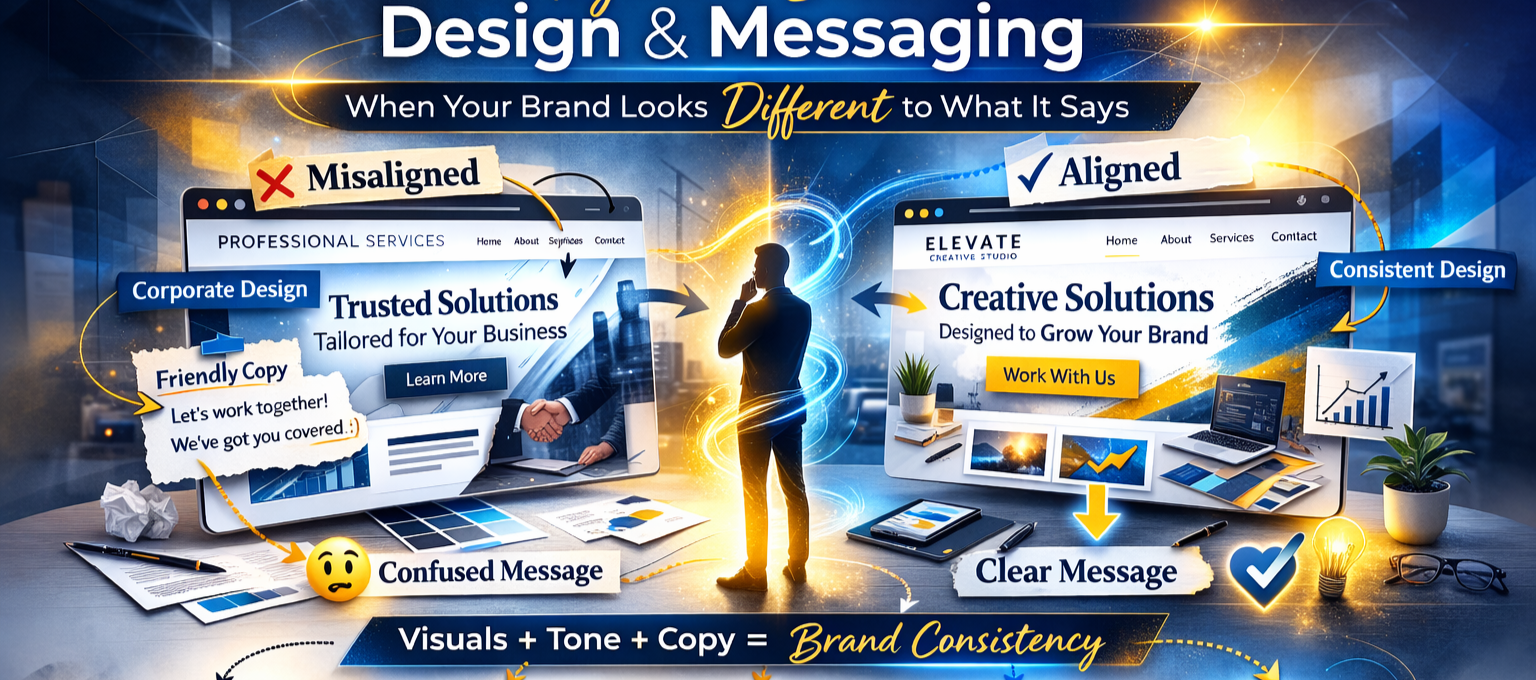
An infographic illustrating the importance of aligning website design with brand messaging to create a consistent and trustworthy customer experience.
Bringing It All Together
Building a successful brand involves more than creating a recognisable logo or choosing an appealing color scheme. It requires a clear understanding of who your audience is, how your business is perceived, and how effectively your messaging is communicated across every platform.
From visual design and tone of voice to storytelling and audience targeting, each element plays a role in shaping how your brand is experienced by potential customers. When these components work together, they create a consistent identity that supports trust, encourages engagement, and strengthens customer loyalty.
However, when messaging, design, and audience expectations are misaligned, even well-intentioned branding efforts can lead to confusion or missed opportunities.
By ensuring your brand communicates clearly and consistently both visually and verbally you create a more cohesive experience for your audience, helping your business stand out in a competitive market and build meaningful, long-term connections with your customers.
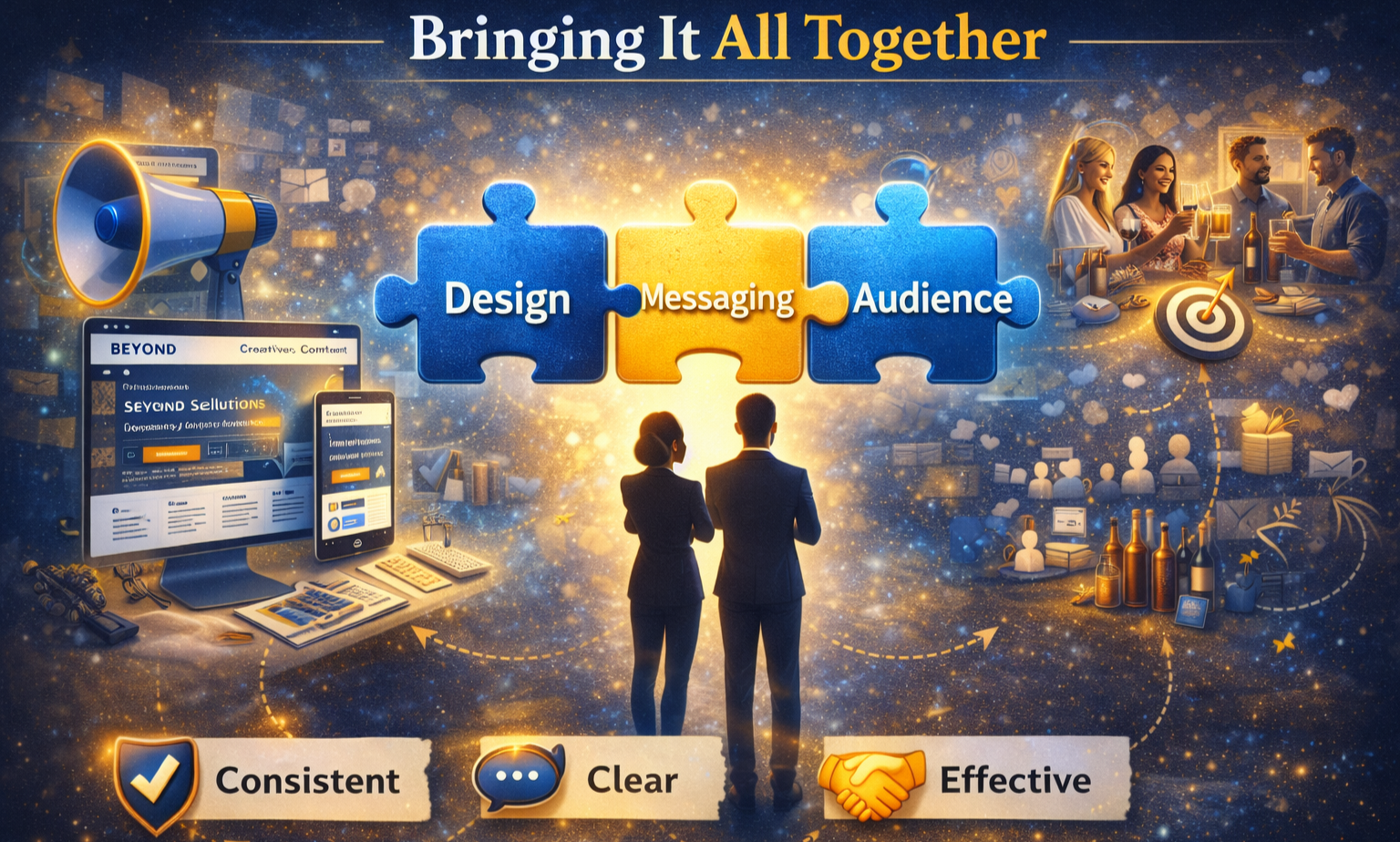
A digital illustration featuring interconnected puzzle pieces labeled design, messaging, and audience to represent cohesive brand communication.